
MARCH OF THE MAYLAND ALLIANCE
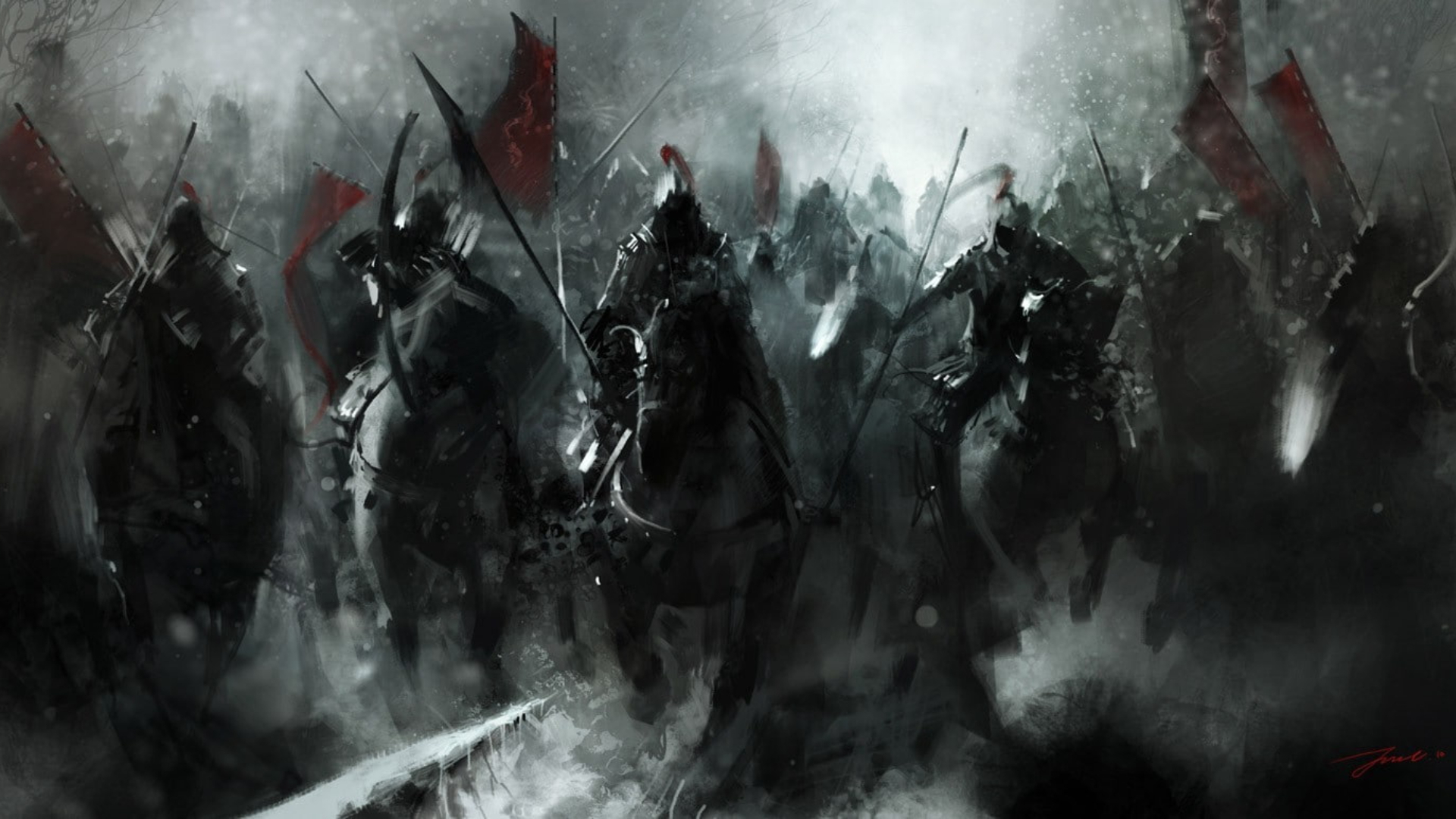
Abstract: The Mayland Alliance was formed in the north of the Dukedom of Mayland in 875 A.D (After the Death of Graen), two years after the end of The Winter War and subsequent unification of The Ivory Isles under King John Lachlann. The Mayland Alliance grew considerably and marched north until they reached Shadowmire and made their stand at the Battle of Sungate.
In 875 A.D (After the Death of Graen) in the Ivory Isles – now united under the wyvern banner of House Lachlann, an uprising was ebbing in the south. Two years had passed since the decisive battle at Forworth Castle, where the fair King Tarth Montrose of Camelon had lost his life in a foolhardy attack against King John Lachlann of Corumand and his dark alliance from the wilds of the north. After Forworth, the uplifted forces of Corumand purged the remaining Camelon forces in their land before plunging southward in force, conquering castle after castle. It is said that the Emerald Principality – the seat of Graenician’s most faithful – vocally condemned the rash and unholy actions of John Lachlann. But that fell on deaf ears, for King John was doing what his ancestors had always dreamed of – wiping the threat of the south-landers and sending them to their knees with either oaths of fealty or before the axeman’s block. Houses that refused to bend their knees or necks to the conqueror had their lands seized by whatever means necessary and given to other more obedient families.
Since uniting the realm by conquest – the final moment being the siege of Camelon Castle, which surrendered after twelve days, the land at first saw a semblance of peace. But as seasons went, there was a gradual, creeping paradigm bleeding across the realm. What were once things hidden in shadow and secrecy had grown bolder. A change was growing in The Ivory Isles. And not a good one.
First came the spreading of blasphemy. Mummers, roving bards and travelling jesters would spin the minds of the crowds against the Graenician faith. At first, it was subtle. But within a year the crowds had gone from jeering or jesting dismissively to these influences, to silently nodding and grunting their approval. The Green Church found less occupants for the dawn sermons and people were furtively carrying tokens to other beliefs that strayed far from the Green Book’s teachings. Heresy was afoot, and the Green Church took to taking actions to counter this rise with public condemnations and benign recitals from the holy text. But it fell on deaf ears, and it was not long until a growth of druids and priests (of course, not Graenicians) festered within the hearts and minds of the people of The Ivory Isles.
Then came the abolishment of the Lunar Order – The witch hunters of The Ivory Isles, who had found themselves struggling against the rising surge of heresy. They were once feared knights who hunted the malignant sorcerers and their monstrous familiars. But now they were met with scorn and vitriolic belligerence. It was inevitable that the malice evolved to violence, leading to riots and death against the Knights of the Grinning Moon. So it was that in the winter of 874 A.D the King of The Ivory Isles declared the annulment of all Graenician orders across the land and dissolved the Lunar Order. The knights were disbanded, and many went into exile.
Then came the surge of lawlessness. See, when King John dismantled the Graenician Orders – many of them being militant, it meant that The Ivory Isles quickly found a significant problem. Now the land was blotted with thousands of exiled or out of work soldiers – many of whom were ridiculed zealots, who were well armed, well trained, and very, very angry with the state of the land and more specifically, it’s ruler. This led to a sudden rise in fanatical violence against settlements that had now rejected the God of Graen.
With the additional spread the multitude of druidic orders, came also the rise in monsters and beasts that prowled the land and terrorised many people. It was an effective trick to ensure they kept their hold on the people who had let them become their leaders, and without help from the Green Church, the people sullenly yet passively accepted. Each fiefdom introduced it’s own laws that were intertwined with the advisement of their new religious leaders, leading to a land fracturing from a single cohesive culture and tradition. Strange festivals that would light up the night, filled with howls, screams and other sounds became commonplace. Sacrificial rites, strange ceremonies and in some places to the north who were more familiar with these practices – the blackest of deeds were beginning to take root, such as cannibalism and blood sorcery.
Despite the lawlessness within the land, the King still held his hegemonic power. He had built a powerful army in the north, and had forged his own order of knights sworn to defend their King and his decrees: And what’s more, he had solidified his power by forming strange accords with foreign forces. It is not known who exactly, though there are speculations that The Hegemony from Vulcanys and Gothland Chieftains from the Mainland were among them. The Kings laws, however egregious, were accepted by his subjects. Those who did not found themselves quickly given the King’s black justice. And let it be known, that there are worse fates than death – fates that King John designed with his few alliance at court so creatively that any thought of rebellion was snuffed the moment it seeped into one’s mind.
But the tyranny of King John was breeding a rebellion that had been simmering in the shadowy woods of Mayland, and perhaps from a most unlikely source. For the main inhabitants of this particular forest within Mayland were the gnomes. The gnomes of Eagle Dell forest, to be specific. Argyn Whiteglade – was the leader of this Grove (called Grovekeepers) and the veteran of two wars: The Winter War and The Second Crusade. He had even survived the Battle of the White Cross in Polaris. The specifics of his rise to prominence are obscure. Some say he brokered an alliance with outlawed knights in the woods, or that the disgruntled Lords of Mayland paid him to voice their discontent for the new land’s order. Ultimately, the steps for Argyn’s rise is murky. But what is know is that he was the one who rekindled the flame of rebellion when he and a band of rogue gnomes and knights stormed the island dungeon of Lymspike. Breaking out the prisoners and offering them a choice: run into the wilds and be free, or join the rebellion and start a life anew.
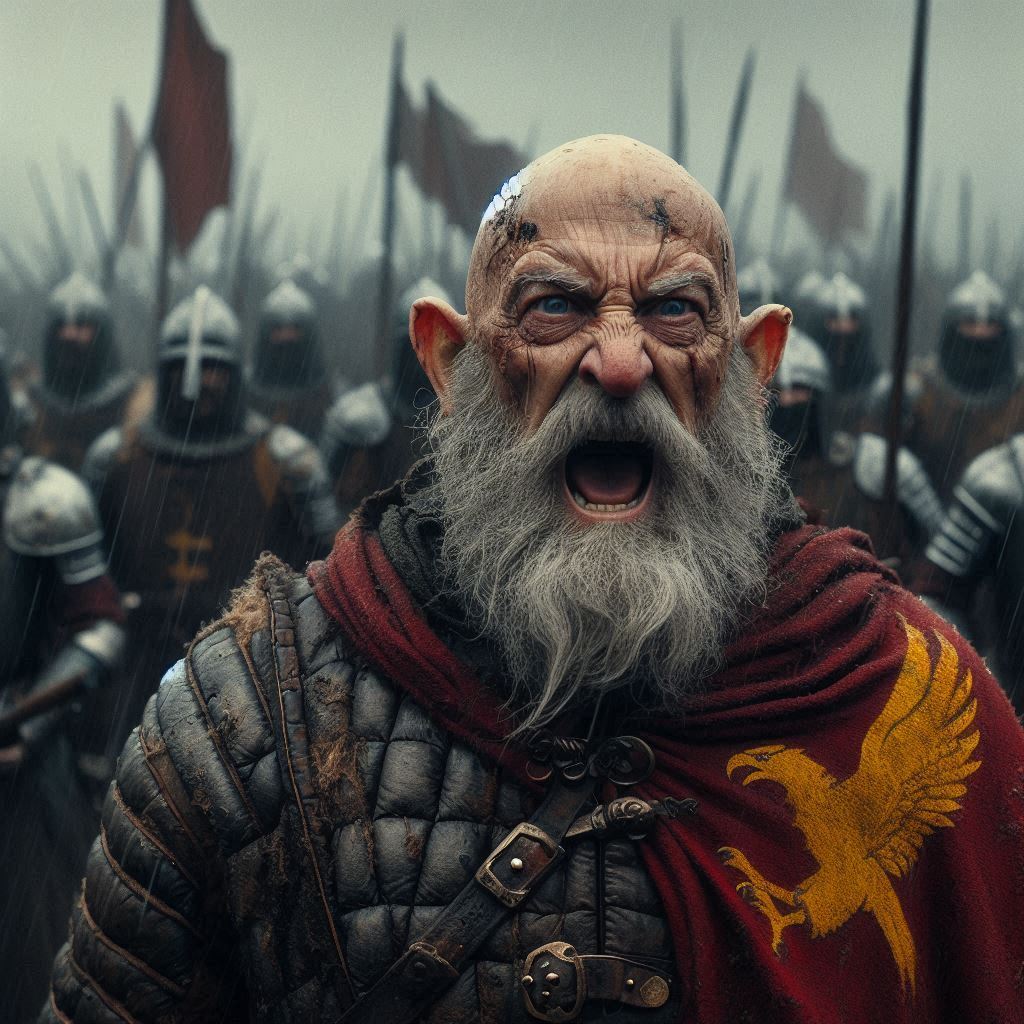
Argyn Whiteglade, Grovekeeper of Eagle Dell Grove
Grovekeeper Whiteglade was amassing an army that had hitherto been strewn scattered across the wilds of The Ivory Isles. When King John heard of this uprising, he sent a lowly Count nearby Whiteglade’s area to quash it. But instead of destroying them, he joined them instead. It was clear that the people had suppressed feelings for the new overlord’s reign. But only a few would act on them, for many of the Houses owed their title and prestige to House Lachlann, and others were wholly enveloped with the whispers of advice from new sorcerer priests and witches.
So it was that in the winter of 875 A.D that the Dukedom of Mayland became alight with rebellion from an alliance between gnomes and men. They established a temporary base at Fort Caitlyn, and from there they began a march to the north, keeping their forces strategically thin as they ambushed trade convoys and ransacked royalist settlements. They were slowly moving northbound – their eyes set on destroying Wyvern’s Tor, the lair of the Wyvern King – but keeping themselves to the western side of the land, so as not to get trapped inland from any surprise attack.
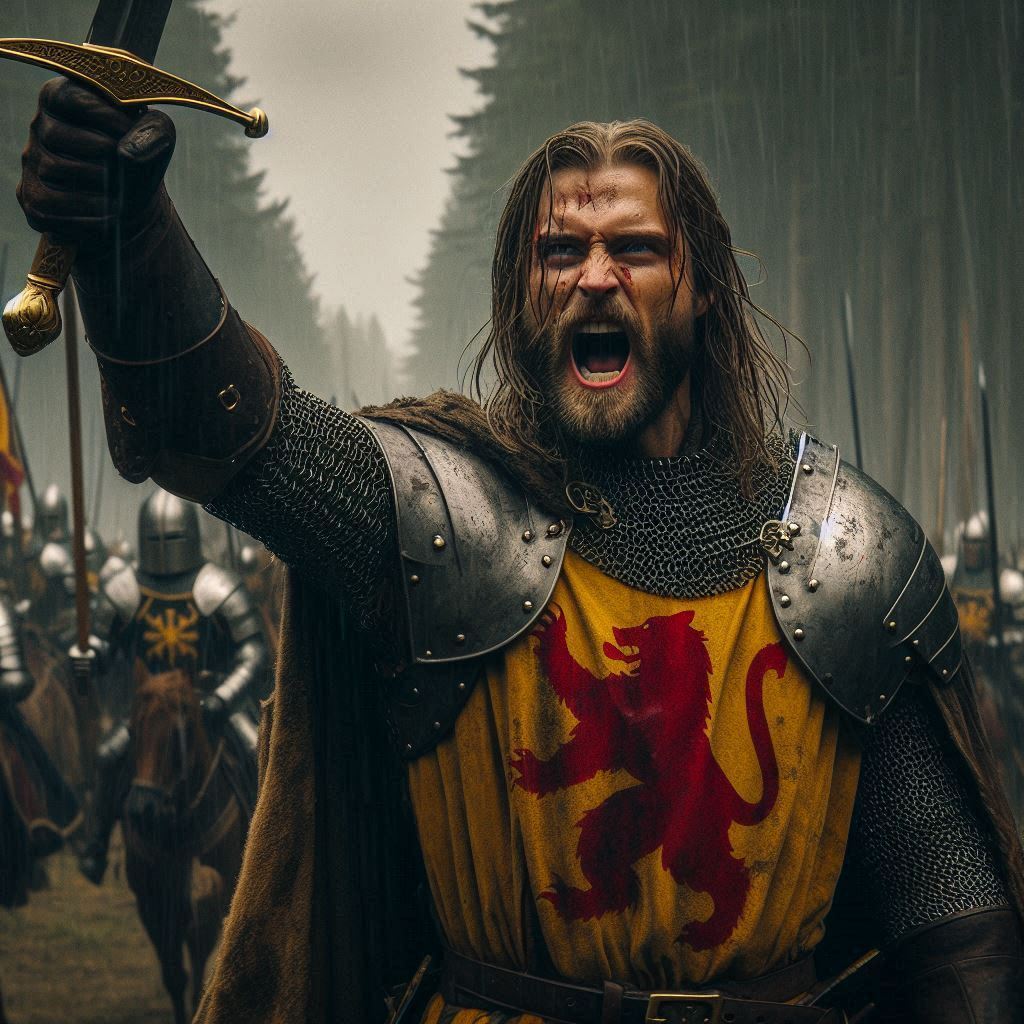
Harris de Spense, the Count of Havais
It was startlingly surprising how quick the Mayland rebels were able to acquire most supporters from the forests and villages. The Mayland rebels had two prominent leaders: Argyn Whiteglade – the Grovekeeper of Eagle Dell, and Harris de Spence – the Mayland Count who’d originally been sent to destroy the rebellion. It is estimated their forces were in the thousands, and only grew as they went ever northward. Whats more, is that the hitherto dissppeared family and close court of Camelon had returned and joined the rebellion, bringing forth their wealth and adventurers who bolstered their campaign greatly. The significant members of King Tarth’s family were his Queen Consort Regina, and their two children Henry and Valerie.
The rest of the Kingdom remained startlingly quiet – even the King had not made any serious operations of attack against their incursions. The rebels grew even bolder and began to sack Cormish outposts in the north like a fully equipped army.
In the north there came about a secretive potential alliance with Harburgh – one of the largest dominions within Corumand, and with the largest army. The Duchess promised weapons and arms if they promised to rid her of her enemies who were harrying her borders – Salcastle, Lorchester and Shadowhill. There were great arguments within the Mayland Alliance’s camp – but they found themselves too deep into enemy territory to afford any risky gambles by crusading east with what little they had. There were fewer friends and folk in these parts who saw their cause just. They needed to expand their alliance beyond the occasional outlaw band or disgruntled knight. And so, they accepted.
They began their first proper siege – something both leaders had knowledge about, although many of their warriors did not. They besieged the small, loosely manned but strategic fortress of Sungate, which acted as a pivotal trade point for the whole north of The Ivory Isles. It was small but well fortified. The Duchess kept her word and sent them new weapons, armour and supplies to begin the siege by use of smugglers.
Once the Mayland rebels set up camp and seized the land, the full might of Shadowmire came hither: A full three thousand strong knights and a thousand archers marched to Sungate’s aid from the south. But the Mayland rebels numbered six thousand, and quickly redirected themselves to face Shadowmire before the advancing knights, and shielded themselves expertly from the archer volleys.
The battle was lengthy – going on for the whole afternoon until, as the evening came, another horn sounded, and to the north came the forces of Harburgh – nine thousand mounted knights, twenty thousand footmen, four thousand reserve archers and a gaggle of roving mercenary companies at the vanguard. And they rushed southwards to the rear of the Mayland rebels, who were sorely fatigued at this point. One may say that this was a slight overkill to send this many to destroy a wavering foe. But the Duchess – being the dark and terrible creature that she was – had no intention of stopping with destroying the Alliance. She would take out two birds with one stone. She would cull the plague of rebels and gain the King’s favour, as well as conquer Shadowmire and bring it under her banner. It was a game well played.
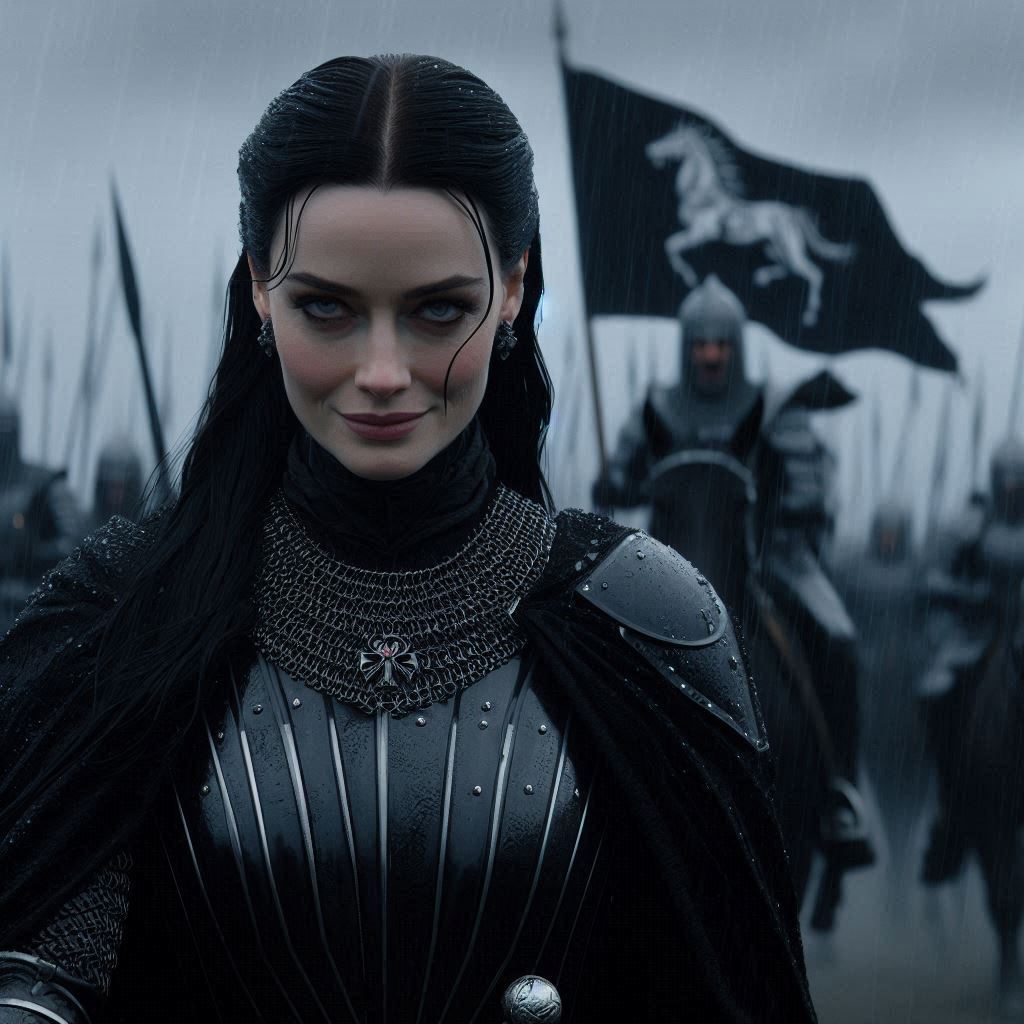
Morwenna Grey, the Duchess of Harburgh
The battle ended at midnight. The Grovekeeper of Eagle Dell and the rogue Count de Spense along with captured members of the Montrose household were put in chains and taken to Harburgh’s dungeons, before sending a letter post-haste to Wyvern’s Tor.
In a day, the Mayland Alliance was vanquished – the deserters fled back into the wilds from whence they once dwelt. And half of Shadowmire was swallowed under the horse banner of Harburgh.
Count Harris de Spense, Groverkeeper Argyn Whiteglade, the wife and sister of the deceased King Tarth and a small retinue of old Camelon who had fled with the Montroses were transported to Wyverns Tor to answer for their treason and face the King’s justice. Count de Spense and Grovekeeper Whiteglade were sentenced to be publicly hanged, drawn and quartered. Queen Consort Regina Montrose was publicly beheaded. The Princess Valerie Montrose was forced into marriage to King John’s eldest son Prince John, but mysteriously she disappeared the day before her arranged wedding, and to this day has never been found. The same can be said for the only other member of the Montrose family who was not captured – King Tarth’s only heir, Henry. His body was not found on the fields of Sungate nor has he ever been found yet.
Since the end of the Mayland Alliance, King John has only gripped his fist tighter around his subjects, as punishment for this insolent insurrection. Though now, just less than a decade later, the King has somewhat relented in his punishment, the land is still squeezed with taxes, pressed with Druidic beliefs and plagued with a tense wariness that haunts it’s people – for as long as the heirs of Montrose still live, the war for The Ivory Isles will not be over.
 FANTASY BOUND STUDIO