
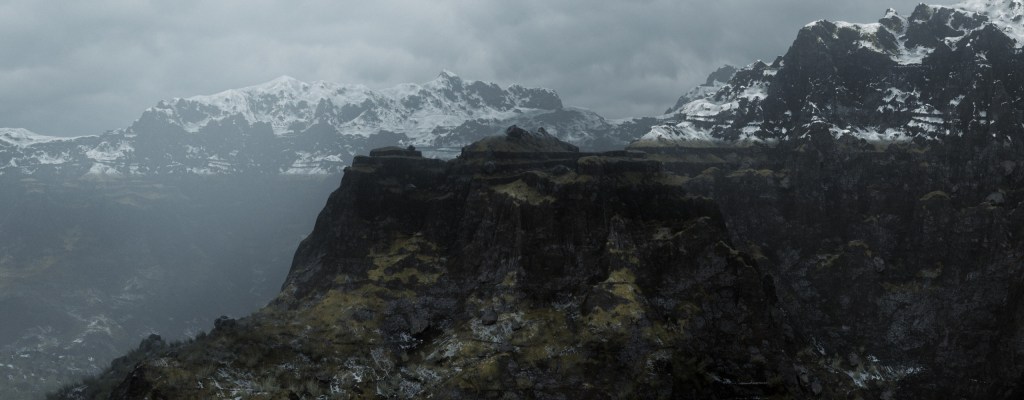
Abstract: Humberland is a rugged and mysterious land known to be dominated by towering mountains, dense forests, and coastal cliffs fortified with natural defences like jagged rocks and reefs. Its inhabitants, the Humbermen (or Painted Ones as they are otherwise called), are noted for their pale, ruddy skin, tall and muscular builds, and deeply spiritual lives, centred on the worship of their three gods: Dagda, Silvanus, and Morrigan. These gods represent balance, peace, life, war and death.
GEOGRAPHY
The island’s terrain is formidable, with steep mountains, dense forests, and a coastline bristling with cliffs and reefs. This natural isolation reinforces the Humbermen’s self-sufficiency and resistance to conquest. Humberland is a large landmass but due to it’s robust natural defences as well as it’s foggy, dismal environment, much of the land itself is uncharted. Explorers do record of strange sightings – abandoned obelisks, stone dwellings or supernatural moments that can be found randomly in the wilderness, showcasing the true ancient history that the land hides. Furthermore, beyond external threats, Humberland is home to formidable native creatures such as fomorians and other aberrations. These creatures are often interwoven into tribal myths and are viewed as both adversaries and manifestations of the gods’ will. Humbermen share this land with these creatures, either as benevolent allies or as mortal enemies. But unlike some of the humans, the creatures that prowl here can be barely sentient, outright hostile and in some valleys or forests, ubiquitous.This also proves exploring Humberland, particular in its northern regions, an incredibly difficult, deadly task.
Crioch Dhe (God’s End) – A thin strip of coastline and peninsulas in the south of Humberland, populated by human tribes who have converted to the Green Faith. It’s the only known part of Humberland where the natives have agreed to trade and accept visitors to their land without hostility. As a result, the tribes across Crioch Dhe have become more welcoming and with each generation they merge the traditions from their old faith with the teachings of The Green Book. God’s End Coast is the least treacherous land to sail to, but even so – the many reefs and whirlpools that populate the sea between Humberland and Corumand give many seasoned sailors pause when venturing to Humberland.
God’s End itself is a land of sloping hills intertwined with tall cliffs and groves of trees. Most of the villages here are built from stone and roofed with wood. But the open fertile hills ensure plentiful harvest for the pale folk of the coast.
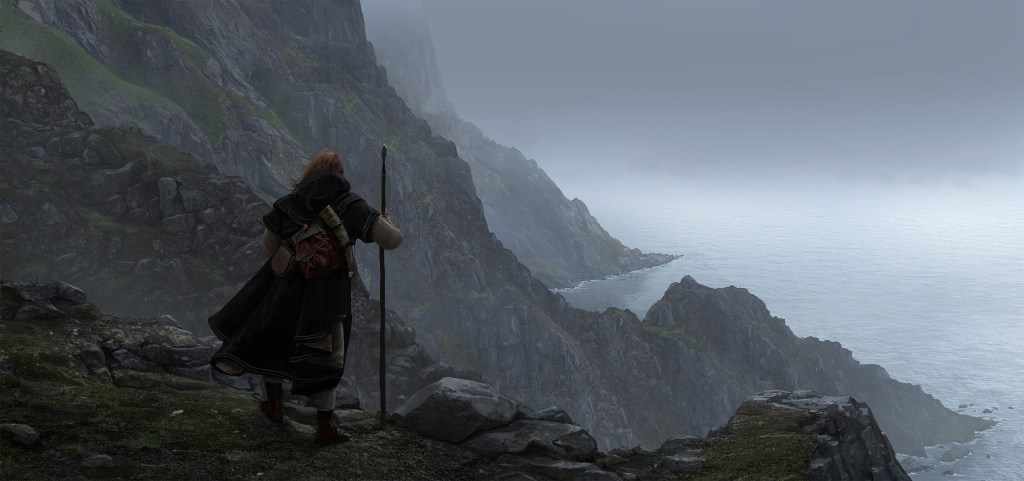
Nead an Uilc (Hive of Evil, or Nest of Evil) – Less than a handful of scholars have ever ventured deep into Humberland and lived to tell the tale, but those who did spoke of a towering cluster of mounds whose peaks dissappear into the eternally cloudy sky. The mountains are black and porous. And it looks unnatural to the sane eye.
According to the few accounts that describe this place, it is said that nearby natives speak of it with a tremor in their voice – calling it a Hive of Evil. Verily, it does look like a hive of sorts – pierced with a million holes, but that is because the mountains are populated by a variety of malevolent creatures. The Hive of Evil is a place where humanity holds little presence. Fiends, abberations and fey-things fester and dwell within the mountains. Strange and perverse noises can be heard echoing from within the mountains across the vast expanse. Nead an Uilc is a subterranean city for the strange and alien who dwell in darkness.
Oddly enough the creatures who dwell near and within rarely venture away from the base of their mountains – they are just as isolationist as all the other denizens of Humberland.
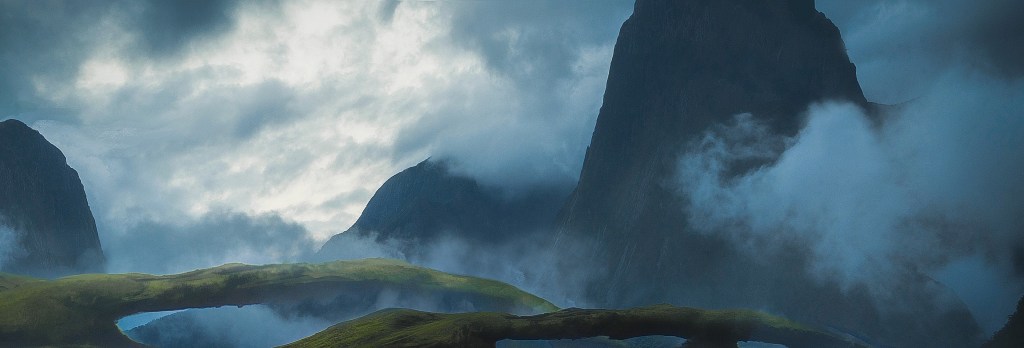
Mucandis – An island several miles away from Humberland, it was once a land that homed the Painted Ones. However, located in the north east, it became a natural buffer for sodian raiders to attack and pillage. Over time, Mucandis’s population of humans and whatever else coexisted began to grow extinct, and sodians took their place. Now Mucandis is a staging ground for sodian raiders to attempt to pillage the wider Humberland, or the Polar Sea in general.
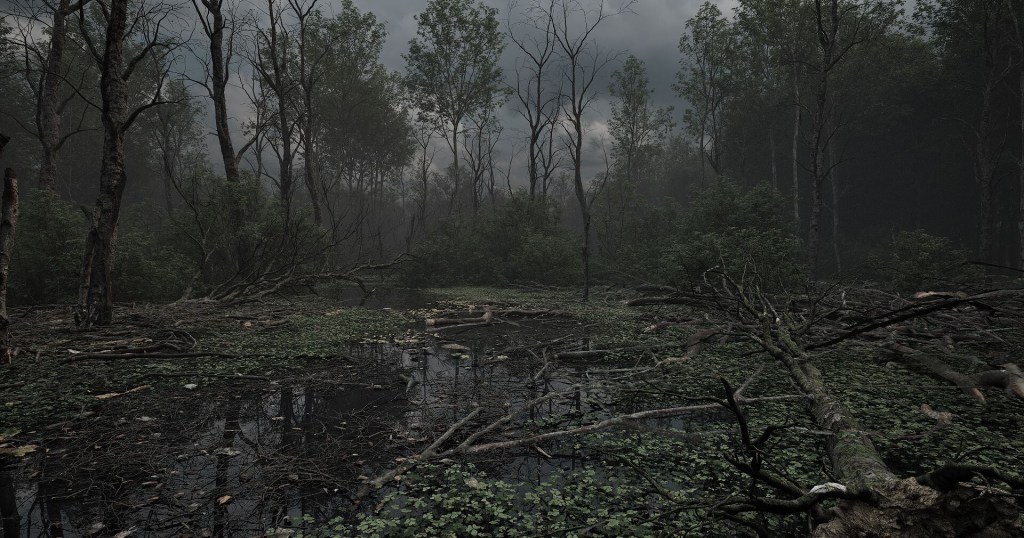
Mucandis itself is a meagre prize. It is a flat, swampy land; filled with marshes, bogs and littered with spindly trees. The sodians here as well are a crude shadow of their parent race to the far, hellish north. Though there are plenty of vegetation and carnivorous habitat for the sodians, they are somewhat more content in their little island. Even their believes have morphed into various amalgamtions between The Maw and the Gods of Umber, along with other superstitous beliefs. Because the sodians dwelt here for more than a century, there are no more humans on the island, unless recently captured slaves.
Mucandis has thread bare ties with their parent people, mostly because of the Sea of Tears awful conditions, but nonetheless when a raiding fleet comes from Vulcanys, the chieftains of Mucandis welcome them. Moreover, they also welcome the rare trade that they get from merchants across Westland and even The Mainlands.
Many Humbermen see the eventual recapture of Mucandis as a divine duty, representing their gods’ will to restore balance and reclaim what was lost. But because of their purely defensive nature, no Humbermen tribe has deigned to sail and reconquer the land. In fact, it has only been the explorers and merchants from the more civilised lands that have been able to establish a connection with those sodians.
CULTURE
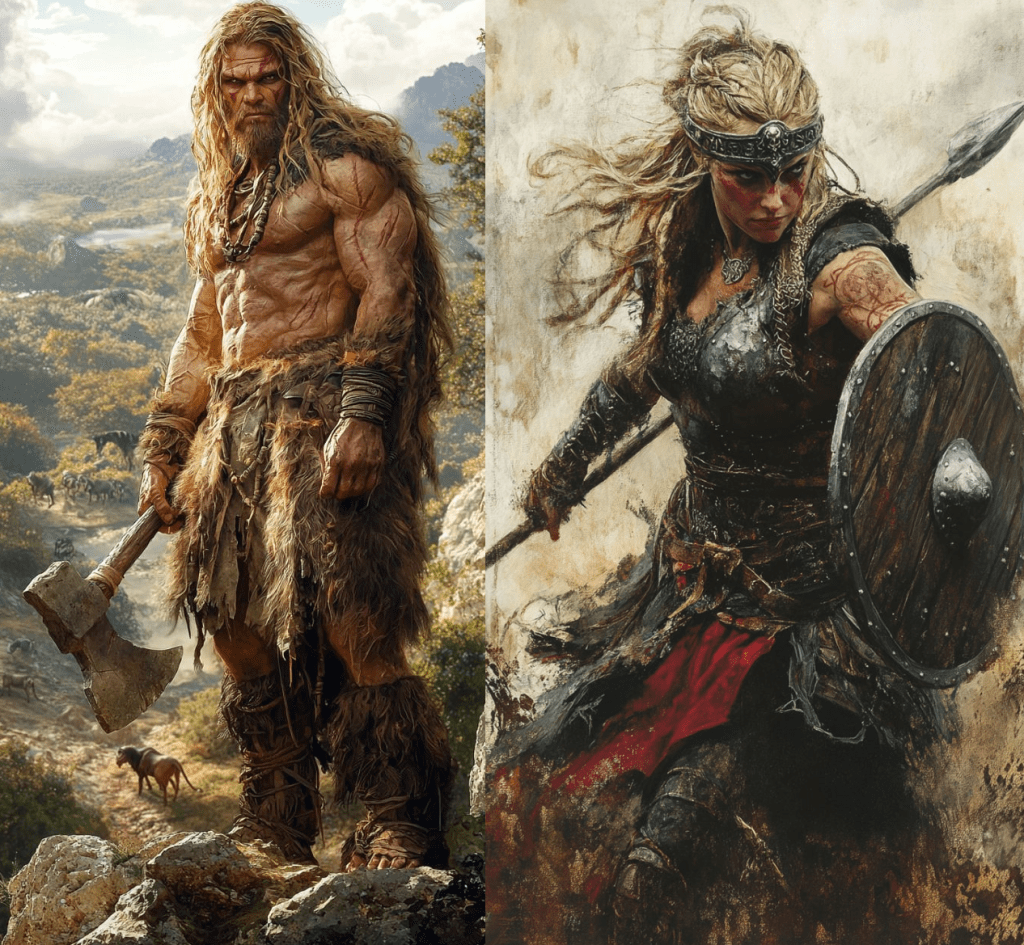
The Humbermen adhere to a deeply traditional way of life guided by their druidic chiefs and the will of their gods.
Their gods reflect a trinity of balance embodied by three figures, who are said to dwell in the afterlife in a paradise called Umber for all their believers to live, explore and adventure forever more. Those who are the most devoted to the Trinity of Umber will receive greater boons when they travel to the afterlife. The Trinity of Umber are made up of the following Gods:
Dagda:
- Known as the God of Balance, Dagda is the ultimate authority in the Umber pantheon, ensuring harmony between all extremes.
- He represents the delicate equilibrium of life, ensuring that neither war nor peace dominates unchecked.
- Dagda’s influence is most prominent during conflicts, as the Humbermen believe his will guides the outcomes to maintain order and justice. It is to the totum of Dagda that Humbermen swear their existence to.
Silvanus:
- The God of Wisdom and Nature, Silvanus symbolizes growth, healing, and the nurturing aspects of the natural world.
- The Humbermen see him as a paternal figure who teaches the importance of wisdom in leadership and sustenance through the land.
- His presence is often invoked during harvests, healing rituals, or when seeking guidance through dreams.
Morrigan:
- The Goddess of War and Death, Morrigan embodies the fierce and destructive forces necessary for survival.
- She is often depicted as a harbinger of doom or victory, leading warriors into battle with promises of glory or righteous vengeance.
- Her role reinforces the Humbermen’s view of conflict as sacred, where even death serves a divine purpose, whether it be a warrior’s death in defending one’s family and home, or as a human sacrifice to appease the Gods for forgiveness or divine gifts.
The Humbermen consider themselves children of these gods, showcasing a symbiotic connection between their spirituality and their daily lives. It is a major reason as to why Humbermen do not seek to invade other lands or rove the sea. And it is also a reason why they find their land a plentiful arena for combat, whether it is with rival tribes, roving monsters or in times of utter peace, the fight amongst each other in blood sports. The Humberman believe that too much peace makes one sloth and ignorant, and too much war makes one into a mindless creature of violence, akin to their fiendish neighbours. Nature’s balance must always be maintained.
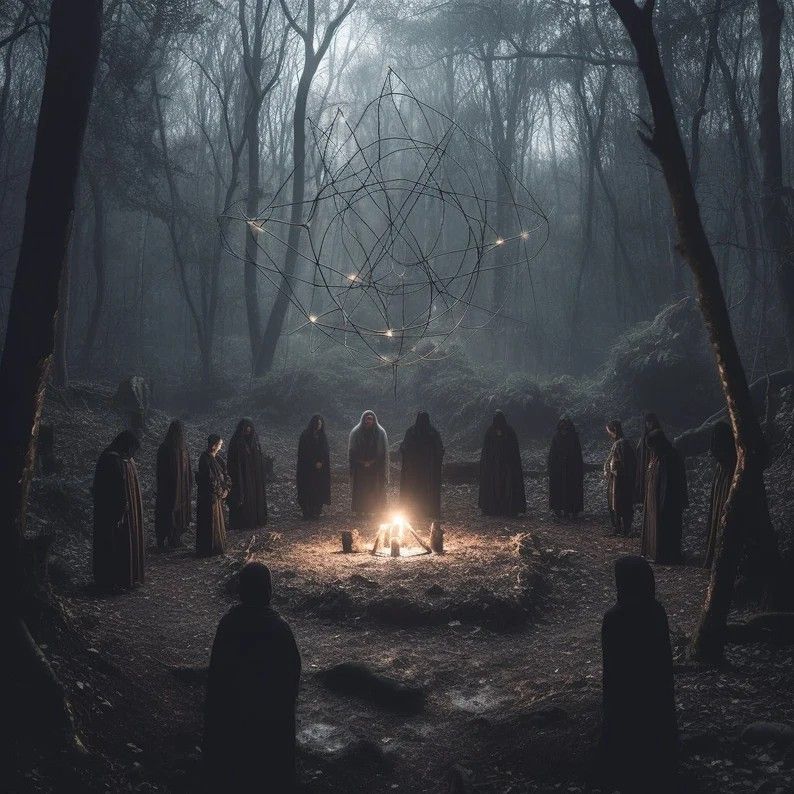
Now, while isolationist by nature, some Humbermen tribes, particularly those at God’s End, have cautiously engaged with outsiders: Coastal tribes have begun limited trading relationships, exchanging rare resources such as medicinal herbs, furs, and fish.These exchanges have introduced foreign ideas and goods, slowly influencing their traditions in subtle ways. Some of these tribes have converted to the Graenician faith in exchange for alliances and protection from external threats. However, many Humbermen (particularly their druidic circles) remain sceptical of outsiders’ intentions, ensuring that such conversions remain rare and limited to vulnerable tribes.
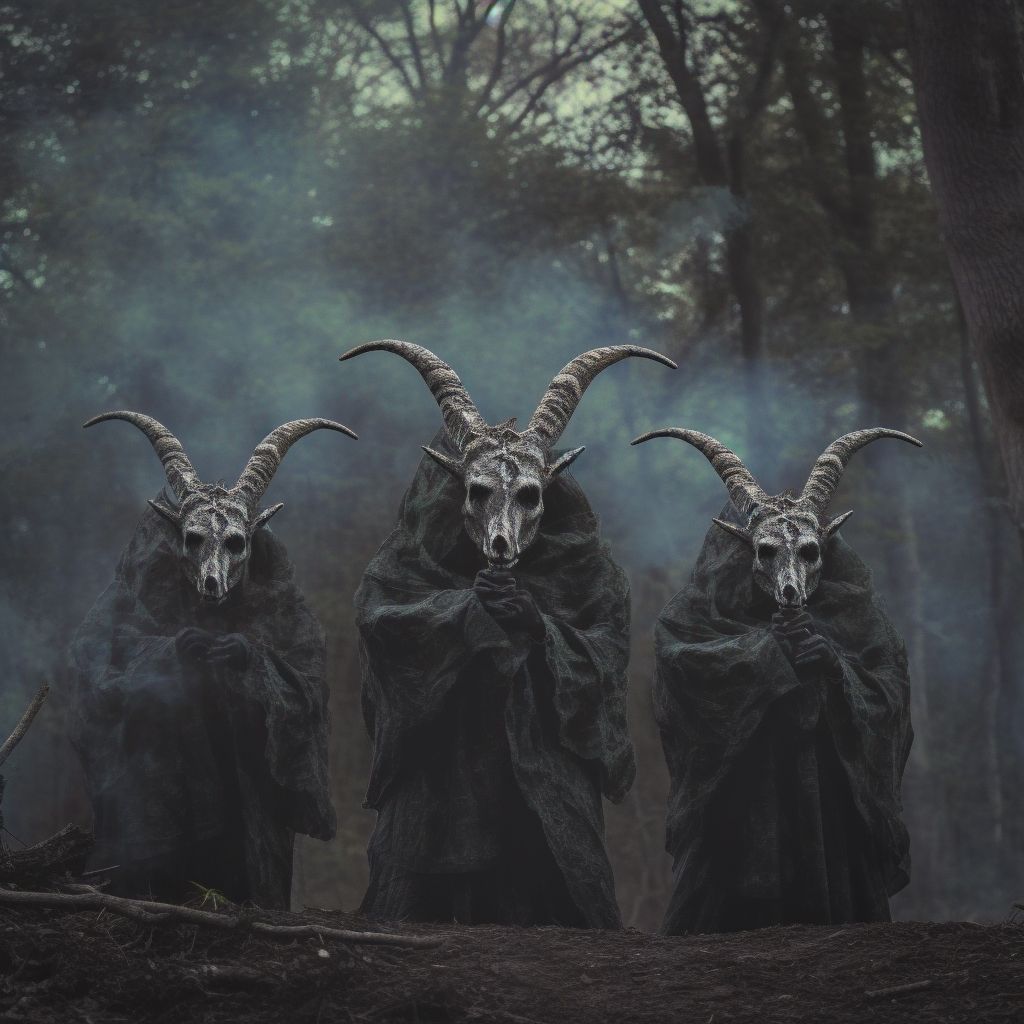
Not every human worships the Umber Gods. Some, particular those that are interbred with the strange and fiendish, worship a myriad of other deities, all of which – according to explorers – are all truly demonic in nature. Highly torture driven sacrifices, perverse rituals and diabolical customs are abound in such tribes. These traditions are predominantly found in the culture of the Fomorians, or “demon-men” as other Humberfolk put it. Hybrids between fiend and creature who see the world through sadistic eyes. Very much like everything else in Humberland, they too are isolationist – content to frolick in the hills or forests, performing gross and terrible acts.
GOVERNANCE
Every tribe is led either by a mighty warrior or an Arch-druid, with the latter often serving as the spiritual and political figurehead. The druids claim to interpret the will of the gods and are revered as mediators between the mortal and divine realms. Even the mightiest chieftain heeds the counsel of their druid advisor. Furthermore, Humberland’s druids practice ancient, nature-based magic. This might include weather manipulation, healing arts, and curses. These rituals reinforce their connection to the land and their gods, making them formidable defenders of their homeland, akin to their tribe’s warriors.
 FANTASY BOUND STUDIO