
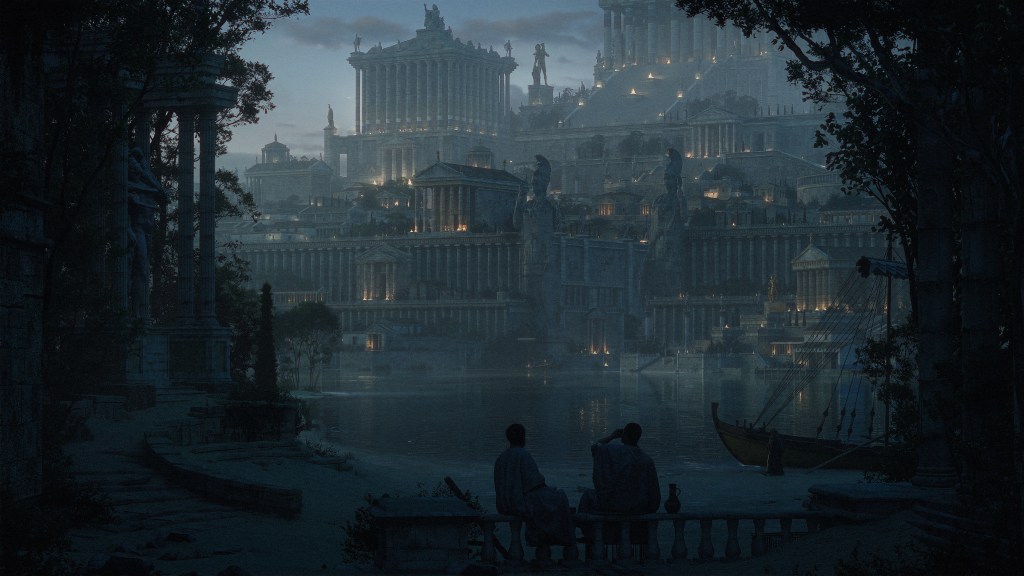
HEART OF THE REPUBLIC
Ah, Ryton! The capital of the The Republic, is the largest and most prosperous city in Barantine – if not the entire Westlands. Its strategic coastal position has made it a hub for trade and cultural exchange, serving as the lifeblood of the Republic’s influence across their shores.
GEOGRAPHY
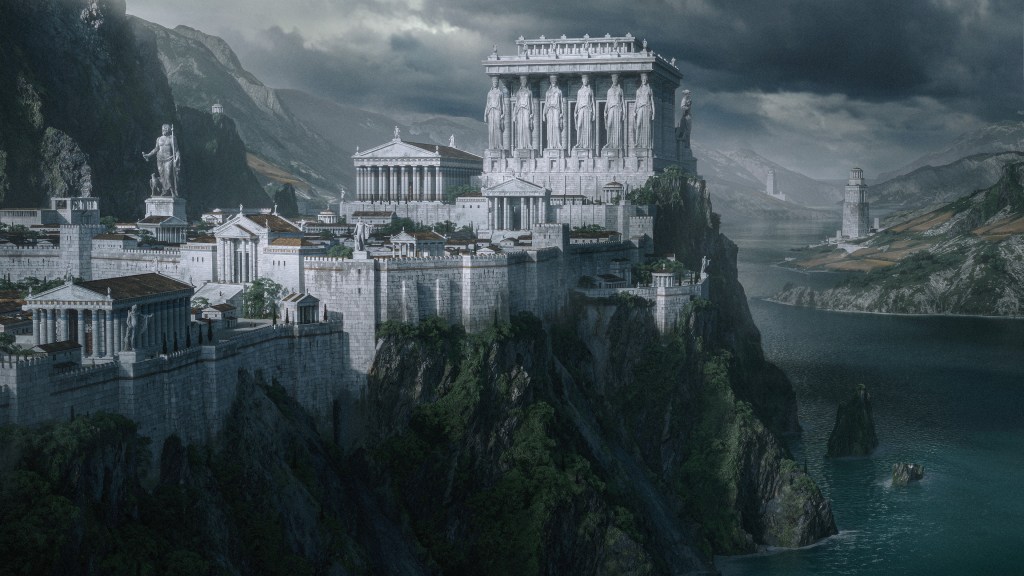
There is still a great countryside of fertile fields and heavy agricultural communities, which feeds the grand city of the province. The city is a landscape in of itself; colossal towers, temples, walls and statues dominate the landscape as one walks east from the quiet farmlands of Ryton’s countryside.
LIFE IN THE CAPITAL
Grand marble buildings dominate the cityscape, including domed forums, aqueducts, temples, and public baths. Streets are lined with colonnades, and markets bustle with people from the Ivory Isles, Pune, Mainland and even Vulcanys!
When it comes to the society of the city itself, while democratic ideals underpin its governance, Ryton reflects the stark class divides of the Republic, from the palatial estates of the Gardens of Ariel to the squalor of Lower Ryton.
NOTABLE LOCATIONS
The Grand Senate
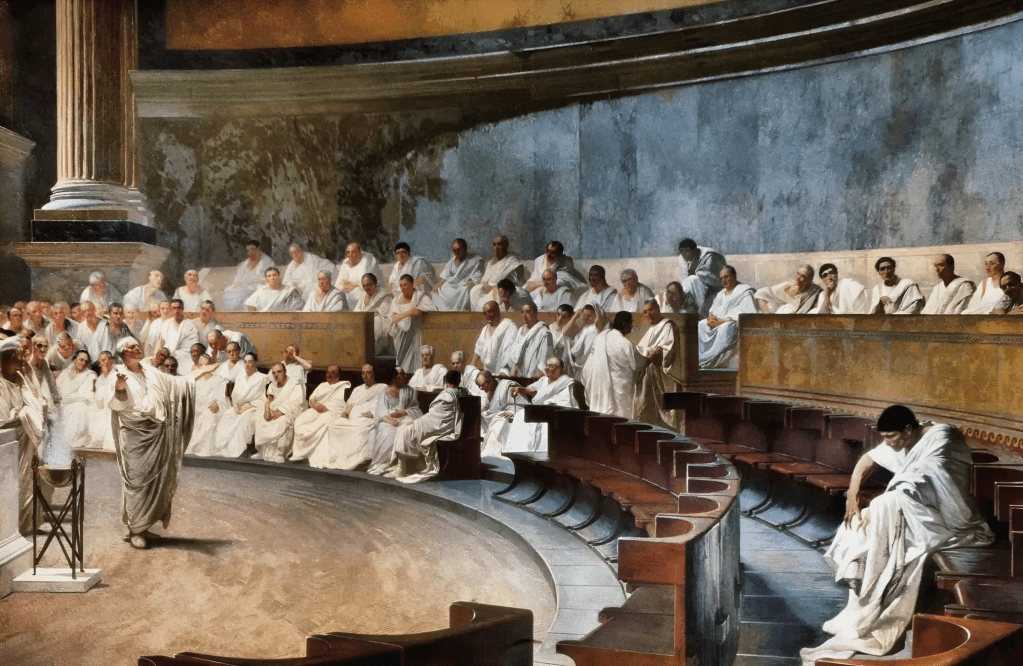
The political heart of Ryton and the Republic, the Grand Senate is a majestic structure of carved white marble and towering columns. It serves as a forum for debates and legislation, where Magistrates from all states gather to deliberate on matters of state.
The Republic is led by The Sovereign Chancellor: Elected to serve as the Republic’s representative, this figure wields considerable influence but is bound by the will of the Senate. Their term is marked by public spectacle and sharp political manoeuvring. The Senate addresses issues ranging from trade policies to war declarations, with its proceedings steeped in ceremony. Public galleries allow citizens to observe the debates, though the lower classes rarely have a say in governance. The Grand Senate represents the Republic’s democratic ideals but also its exclusivity, as power remains concentrated in the hands of the elite.
The Gardens of Ariel
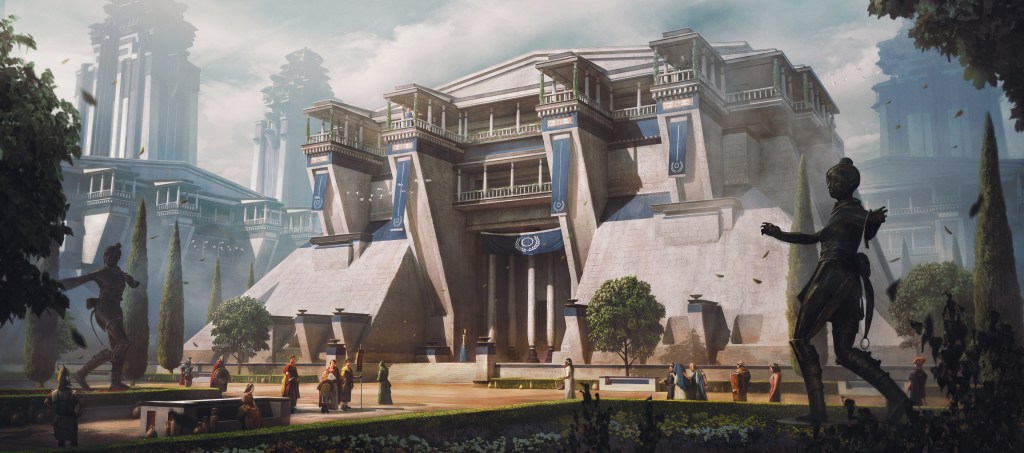
Nestled on the city’s highest hill, the Gardens of Ariel are a sanctuary of opulence and privilege. Reserved for the Republic’s aristocracy, this district boasts sprawling villas, manicured gardens, and private temples. Here, the highborn indulge in lives of leisure and decadence. Lavish feasts, secretive or scandalous gatherings, and carnal indulgences are common, as is political scheming. Winding paths through flowering groves lead to secluded alcoves, fountains, and pools. Statues of gods and heroes stand as symbols of cultural pride and divine favour. The Gardens symbolize the Republic’s vast inequality, with its glittering luxury a stark contrast to the deprivation of Lower Ryton. Because of this the Gardens are guarded not only by hired muscle, but also by Red Praetorians – the esteemed defenders of The Sovereign Chancellor, but also protectors of the inner circles of the highest ranks of nobility.
Lower Ryton

Away from the majority of the labyrinthine streets, and far, far away from The Gardens, there is a sprawling warren of narrow streets and crumbling tenements. Lower Ryton is the underbelly of the capital. Home to the poor and the destitute, it is rife with crime, vice, and despair.
Despite its grim reality, Lower Ryton teems with life. Street performers, black-market traders, and illicit brothels cater to every need and vice. Gang warfare is frequent, and corruption runs deep. The city watch – the Urbanae Cohorts – maintains a presence, but many of its members are bought by the criminal underworld. Temples dedicated to less prominent deities and grassroots efforts by certain Magistrates offer a glimmer of hope to Lower Ryton’s struggling population.
THE CITY OF COIN
Ryton is a grand city of contrasts—its elite indulge in secret affairs and power plays, while its lower classes explore primal passions in the chaos of their environment. The Grand Senate’s decisions often exacerbate class divides, as policies favor the aristocracy at the expense of the masses. This fuels resentment and occasional uprisings in Lower Ryton. Despite its flaws, Ryton is a beacon of artistic and intellectual achievement, attracting poets, philosophers, and engineers who contribute to its grandeur. Ryton’s combination of grandeur and grit makes it a vivid embodiment of the Republic of Barantine’s values and struggles, reflecting the beauty and complexity of ancient civilizations.
 FANTASY BOUND STUDIO